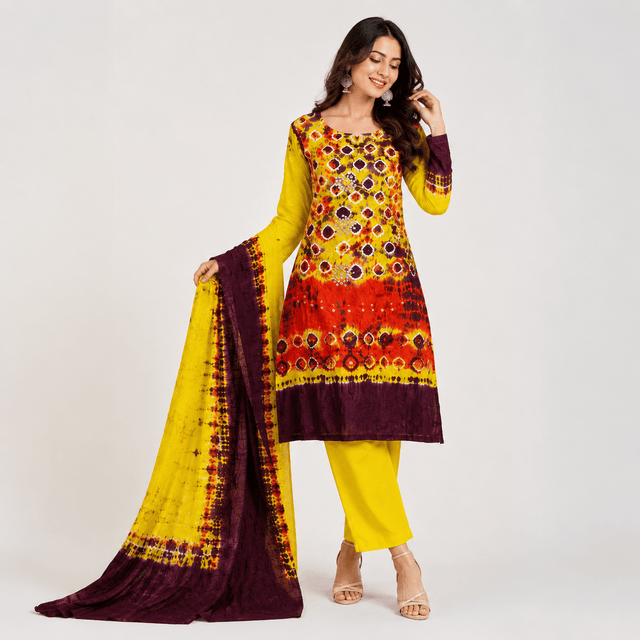
A plain kurta is a useful starting point because it gives you room to change the mood of an outfit without replacing the whole look. A printed, embroidered or contrasting dupatta can add colour and detail; a quieter one can keep the outfit understated. The key is to make the pieces work together rather than matching every detail exactly.
Use this guide to choose a dupatta for a plain kurta for everyday wear, family gatherings or festive occasions. The suggestions are styling principles, not strict rules—comfort, personal taste and the details of the actual garment should lead your final choice.
1. Start with the kurta’s colour and surface
Look at the kurta in daylight and note whether it is warm-toned, cool-toned, bright or muted. Also check its surface: a solid matte fabric gives you more freedom to use a patterned dupatta, while a kurta with embroidery, texture or a decorated neckline may already provide enough detail.
- Solid kurta: try a printed, woven or bordered dupatta as the main accent.
- Embroidered kurta: choose a simpler dupatta if you want the embroidery to remain the focus.
- Dark kurta: a lighter or contrasting dupatta can make the outfit feel more open.
- Light kurta: a deeper colour can add definition without needing heavy accessories.
Do not rely only on the product photograph. Screen brightness, indoor lighting and camera settings can affect how a shade appears. Check the listing description and any available additional images before deciding.

2. Choose one of three colour approaches
Contrast
Use a visibly different colour when you want the dupatta to stand out. For example, a mustard accent against a deeper blue or teal base can create a lively combination. Keep the rest of the accessories simple if the contrast is already strong.
Tonal pairing
Choose shades that sit near each other, such as dusty rose with a softer pink or teal with a blue-green accent. Tonal dressing can look coordinated without requiring the shades to be identical.
Neutral balance
Ivory, off-white, beige and other understated shades can calm a bright kurta or a busy print. If you are unsure, repeat one colour from the kurta in a small detail on the dupatta rather than trying to match the entire outfit.

3. Balance prints, borders and embroidery
When the kurta is plain, the dupatta can carry the print. When the kurta already has a prominent motif, consider a smaller print, a simple border or a mostly solid dupatta. You do not have to avoid mixing patterns, but give the eye one clear focal point.
- Pair a busy print with a calmer base colour.
- Let a wide or ornate border remain visible instead of hiding it in multiple folds.
- Repeat one accent colour in earrings, bangles or footwear rather than adding several unrelated colours.
- For a more relaxed daytime look, keep the embellishment level similar across the outfit.
A traditional print can be a focal point on its own. If you like Bandhani-inspired colour, for example, keep the kurta and jewellery uncomplicated so the pattern can be appreciated.

4. Match the fabric weight to the occasion
Think about the weather, how long you will wear the outfit and whether you need to move freely. A heavier or highly embellished dupatta may suit a short celebratory event, while a lighter-feeling drape may be more comfortable for commuting, hosting or a long family gathering. Do not assume the weight or care needs from a photograph alone—read the fabric and care information on the product page.
If the dupatta is part of an unstitched dress-material set, confirm exactly what is included. Check whether the listing describes a dupatta, its print or border, and the fabric details before planning the finished outfit.
5. Pick a drape you can comfortably manage
There is no single correct way to drape a dupatta. A one-shoulder drape keeps the front of the kurta visible; a two-shoulder drape can feel more secure when you are moving around; and a front-open drape can show a decorative kurta or neckline. Try the drape before leaving home and check that it stays in place when you sit, walk and reach for things.
If the dupatta has a decorative border, arrange it so the border is visible from the front or along the edge. Use a discreet pin only if appropriate for the fabric, and avoid pinning delicate or open-weave material in a way that could snag it.
6. Keep jewellery and other accessories in proportion
If the dupatta has a bold print or border, choose one main accessory rather than wearing statement earrings, a large necklace and multiple heavy bangles together. With a simple dupatta, you have more freedom to add a noticeable earring or necklace. The neckline of the kurta matters too: a decorated neckline may look balanced with earrings alone, while a simpler neckline can leave room for a necklace.
7. Three easy outfit formulas
- Everyday: a solid kurta, a light-looking printed dupatta and small earrings. Keep the drape easy to adjust.
- Family gathering: a plain kurta with a contrasting border, coordinated earrings and one accent colour repeated in the footwear or bag.
- Festive: a deeper or brighter dupatta with a defined border, a simple base outfit and one focal accessory. Check the full look in daylight before leaving.
Shop thoughtfully: check the set details
If you prefer a coordinated set, compare the details on these existing Couturier Design product pages: teal blue embroidered unstitched dress material with dupatta, pink unstitched dress material with printed dupatta and Rajasthani Bandhani dress material in yellow and maroon. These are examples for comparing colour and print—not a promise that every shade will look identical on every screen.
Before ordering, check the product description, measurements, included pieces, care instructions, current price and delivery/return terms shown at checkout. If you are buying unstitched material, remember to account for tailoring and finishing separately.
Quick checklist before you leave
- Does the dupatta complement the kurta’s colour?
- Is there one clear focal point: print, border, neckline or jewellery?
- Can you move and sit comfortably in the chosen drape?
- Have you checked the actual fabric and care details?
- Does the outfit feel like you, rather than simply following a rule?
The best dupatta pairing is one that makes the outfit feel intentional and remains comfortable throughout the day. Start with colour, balance the detail, test the drape and use the product description to confirm what you are buying.
For complementary styling ideas, browse women’s ethnic wear and the festive jewellery collection. Confirm current product details, availability and return terms on each listing.
If you are comparing outfit pieces before ordering, also read our guide to measuring kurta sets and dress material.
Shop products related to this guide
Shop the products in this guide
Explore the relevant Couturier Design picks below. You can add an item to your cart without leaving this article.