How to Choose a Women's T-Shirt Online: Neckline, Shoulder Fit and Size Checks
A T-shirt can look straightforward in a product photograph, but the right fit depends on more than choosing a letter size. Neckline shape, shoulder placement, sleeve length and the amount of ease through the body all affect how a T-shirt feels and sits. A few checks before ordering can make online shopping more considered.


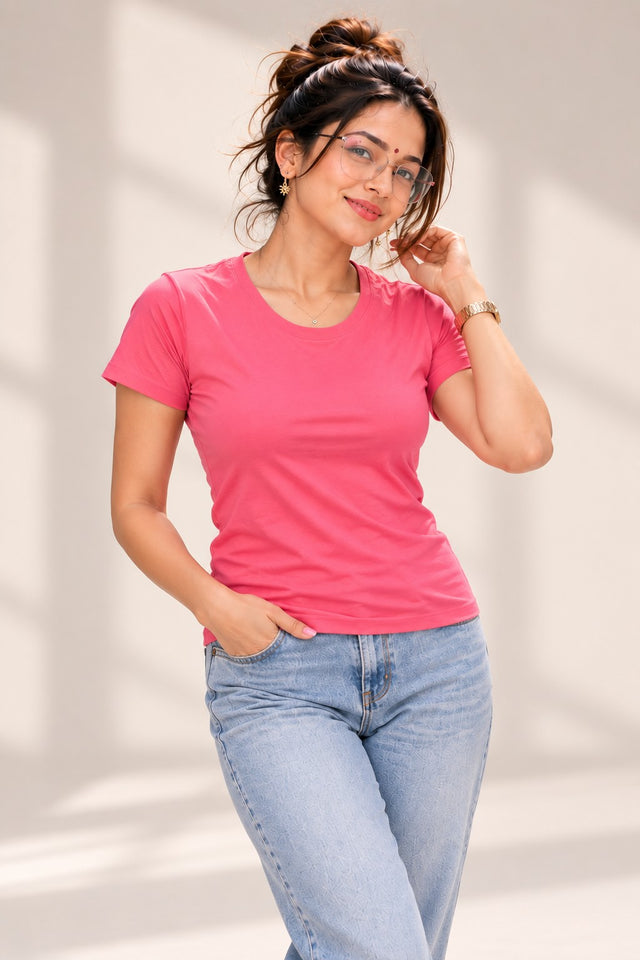
Couturier Design currently lists pink and white women's T-shirts described as slim-fit styles with a round neckline. Both product pages show the size options Small, Medium, Large and Extra Large. Use the live listings to confirm the options and any measurement information available at the time you shop.
Understand the fit description first
A slim-fit T-shirt is intended to sit closer to the body than a relaxed or oversized style. That does not tell you the exact garment measurements, so do not assume that the same letter size will fit identically across different brands or product types.
Think about how you prefer a T-shirt to sit. Some people like a close fit through the waist; others prefer more room around the chest and arms. Your comfort preference matters more than choosing a size because it is labelled “small” or “large”.
Take your measurements before comparing sizes
Use a flexible measuring tape and keep it comfortably level. Avoid pulling it tight or adding extra room yourself; compare the measurements you take with the size guidance provided by the product page, if available.
- Chest or bust: measure around the fullest part of the chest while keeping the tape level across the back.
- Shoulder width: note the distance across the back from one shoulder point to the other, if the product provides a shoulder measurement.
- Body length: measure from the high shoulder point down to where you prefer the hem to sit.
- Sleeve length: consider where the sleeve ends on your upper arm and whether you prefer more or less coverage.
Body measurements and garment measurements are not the same. A garment needs some ease to allow movement, and a slim-fit design may have less ease than a relaxed T-shirt. If the product page does not provide a measurement chart, do not guess a precise fit from the model photograph.
Use a T-shirt you already like as a reference
One practical method is to take a T-shirt from your wardrobe that fits the way you want. Lay it flat on a smooth surface without stretching the fabric. Measure across the chest, shoulder seam, sleeve and body length. Compare those figures with the garment measurements on the product page if they are provided.
This comparison can be more useful than choosing a size based only on a generic chart. Make sure the reference T-shirt has a similar fit description; a relaxed T-shirt is not a reliable comparison for a slim-fit style.
Check the shoulder seam and sleeve
On a conventional set-in sleeve, the shoulder seam usually sits close to the point where the shoulder turns into the upper arm. If the seam falls too far down, the T-shirt may look more relaxed than intended. If it pulls inward or creates tension, the fit may be too narrow for your preference.
Look at the sleeve opening as well. It should allow comfortable movement without digging into the arm. Product photographs can help you understand the general silhouette, but they cannot replace measurements or a clear size guide.
Choose the neckline you will enjoy wearing
A round neckline is a familiar, easy-to-layer shape. Check how high or low it sits on the model in the product photographs, and think about whether you prefer a closer neckline or more space around the collarbone. The Couturier Design pink and white T-shirt listings both describe a round-neck design.
When checking the neckline, also look at the collar band and stitching in the product images where visible. These details help you understand the design, but do not assume a particular fabric, stretch level or construction unless the listing confirms it.
Compare the listed size options carefully
The current product options for the two Couturier Design examples are:
- Pink T-shirt for Women – Slim Fit Round Neck Tee: Small, Medium, Large and Extra Large.
- White T-shirt for Women – Slim Fit Round Neck: Small, Medium, Large and Extra Large.
These are the size labels shown in the Shopify product options when this guide was prepared. They are not body measurements, and they do not guarantee that a particular size will fit every person in the same way. Check the live page for current options and any size chart before ordering.
You can also browse the Women’s Casual & Co-Ord Wear collection to see the wider casualwear selection.
Think about how you plan to wear the T-shirt
If you intend to tuck the T-shirt into jeans or a skirt, check that the body length gives you enough fabric to tuck comfortably. If you prefer to wear it untucked, consider where the hem falls in relation to your hip. For layering under an open shirt or jacket, a closer fit may be easier to manage than a bulky silhouette.
For everyday movement, lift your arms, reach forward and sit down when trying a similar T-shirt at home. Notice whether the neckline shifts, the shoulder pulls or the hem rides up. These simple checks help you understand the fit you prefer before comparing it with an online listing.
Common online T-shirt sizing mistakes
- Choosing only by height or weight: body proportions differ, so use measurements where the product page provides them.
- Assuming all brands use the same chart: size labels are not universal garment measurements.
- Ignoring the fit description: slim-fit, regular-fit and oversized styles are intended to sit differently.
- Using a stretched reference garment: lay your comparison T-shirt flat without pulling it out of shape.
- Guessing the fabric: check the product details rather than assuming cotton, stretch or a particular weight from the photograph.
- Overlooking the return information: review the current store policy before placing an order.
Before you place the order
Open the product page, review all available photographs, confirm the selected size option and check whether measurements or additional fit information are provided. If a detail is not stated, do not treat it as confirmed. Keep the product page as your final reference because listing information can change.
Choose the fit that feels right to you
A useful T-shirt size decision starts with your preferred fit, not with a guess. Compare a well-fitting T-shirt from your wardrobe, check shoulder and body measurements where available, and read the product description carefully. A little preparation can help you make a more confident choice when shopping for a women's T-shirt online.