Unstitched dress material gives you the freedom to plan the fit, length and finishing of an ethnic outfit, but that flexibility works best when the details are discussed before cutting begins. Once fabric has been cut, it may be difficult or impossible to change the design without visible joins or a shortage of material. Use this checklist to prepare for a tailor, avoid assumptions about what is included and keep a clear record of the choices you make.


Lay out every included piece first
Before visiting your tailor, open the parcel carefully and compare the contents with the product listing. Identify the main fabric, any dupatta, lining or other pieces explicitly included in the description. Do not assume that lining, sleeves, salwar fabric or decorative trims are part of every set. If anything is unclear, confirm it against the listing before the tailor starts cutting.

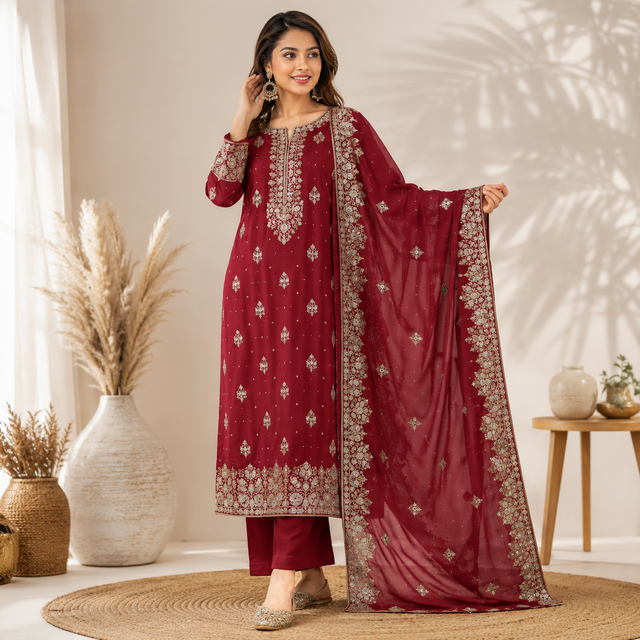
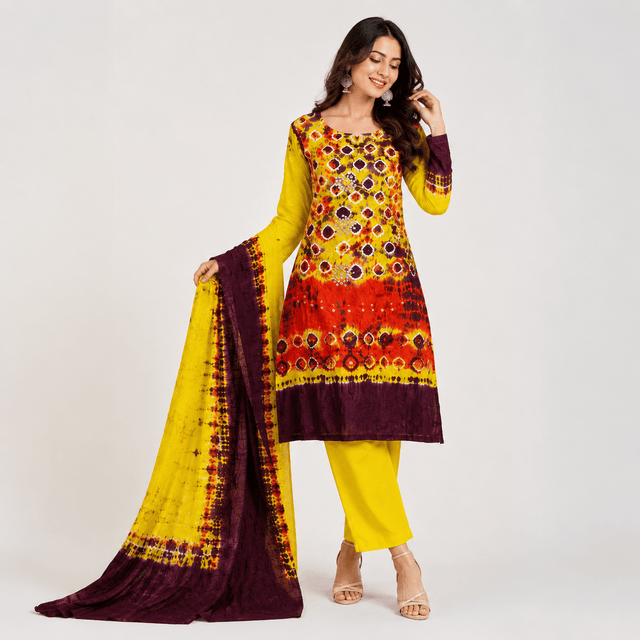
Existing Couturier Design options include Maroon Embroidered Unstitched Dress Material, Teal Blue Embroidered Unstitched Dress Material with Dupatta, Pink Unstitched Dress Material with Printed Dupatta and Rajasthani Bandhani Dress Material. Check each listing for the current description, included pieces and fabric information.
Decide the silhouette before the fabric is cut
Bring a reference photo if you have one, but tell the tailor what you like about it: the neckline, sleeve length, ease through the body, hem shape or trouser width. A photo is inspiration, not a complete pattern. Discuss how the design should work with your own measurements and the available fabric.
- Kurta length: decide where the hem should fall with the footwear you expect to wear.
- Sleeves: agree on length, opening and whether any extra fabric is needed for a cuff or slit.
- Neckline: choose the shape and depth before embroidery or motifs are cut.
- Bottoms: confirm whether you want straight trousers, a wider leg or another shape and whether the set includes enough fabric for it.
- Dupatta: discuss whether it will be worn full width, pleated, bordered or simply draped.
Ask the tailor to show the proposed placement of prominent motifs or borders before cutting. If the fabric has a directional print or an embroidered panel, the layout can affect how much usable fabric remains.
Ask about fabric care before pre-washing
Do not automatically wash every unstitched dress material. First check the product's fabric and care information. Some washable fabrics may need pre-treatment before cutting because shrinkage or colour release after stitching can affect the finished garment. Delicate embroidery, special finishes and fabrics that require dry cleaning may need a different approach. If the care method is uncertain, ask the seller or an experienced tailor before wetting the fabric.
The Sewing & Craft Alliance guide to preparing fabric explains why fabric preparation and colour-fastness checks matter before sewing. Follow the care instructions for the actual fabric rather than applying one washing method to every material.

Confirm measurements and ease
Give the tailor current measurements and explain how you prefer the garment to fit. A measurement sheet should record the points that matter for the chosen design, such as shoulder, bust or chest, waist, hip, sleeve length, armhole, kurta length and trouser length. The exact list varies by garment. If you are using a garment that already fits well as a reference, bring it along and point out what you would like to keep or change.
Measurements are not the same as finished garment dimensions. Ask how much ease the tailor plans to allow for movement, sitting and the fabric's drape. If you are unsure about the cut, request a fitting before final finishing rather than expecting every alteration to be possible after the garment is completed.
Plan lining, fastenings and finishing separately
Ask whether lining is required for the intended fabric and colour, and who will supply it. Discuss zips, hooks, buttons, drawstrings, pockets, side slits and seam finishing before work begins. If extra trims or matching thread are needed, agree on those details in advance. These are tailoring decisions, not features that should be assumed to be included in an unstitched set.

Keep a clear timeline and alteration plan
If the outfit is for a function, tell the tailor the actual event date and agree on a realistic fitting date. Leave time to try the outfit with the intended innerwear and footwear, sit down, raise your arms and walk. Check that closures work, the hem hangs as intended and the sleeves allow comfortable movement. Avoid leaving the first fitting until the day before the event.
Write down the agreed design, measurements, lining and trim decisions, fitting date and any changes. A simple note helps prevent misunderstandings when the outfit has several details.

Final pre-tailoring checklist
- Have you checked every piece against the listing?
- Have you confirmed fabric and care information?
- Is the silhouette decided before cutting?
- Have you discussed motif and border placement?
- Are measurements current, with ease agreed?
- Are lining, fastenings and extra trims accounted for?
- Is there time for a fitting and possible alteration?
Browse the Women's Ethnic Wear & Unstitched Dress Materials collection to compare available options. For a related pre-purchase step, see our guide to measuring a kurta set or dress material before ordering. The two tasks are different: measure before buying, then agree on construction and finishing before tailoring starts.
Good tailoring begins with clear decisions and a fabric plan that matches the care instructions. Confirm the details before the first cut, and keep a written record of the agreed design.
Shop products related to this guide
Shop the products in this guide
Explore the relevant Couturier Design picks below. You can add an item to your cart without leaving this article.