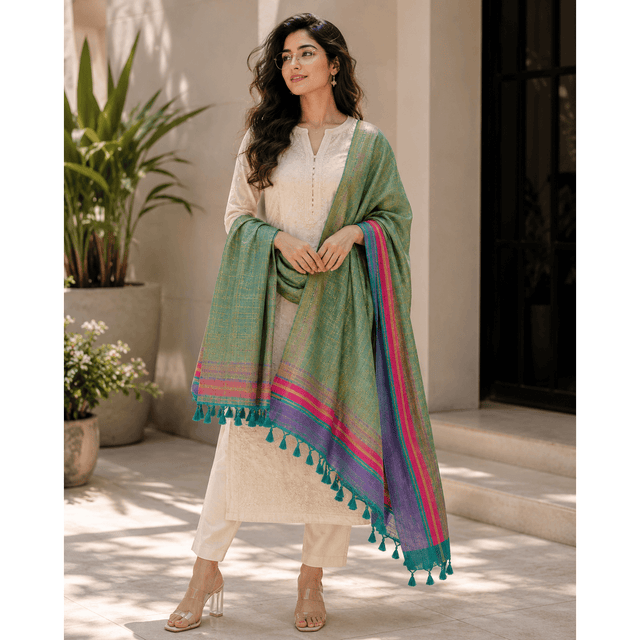
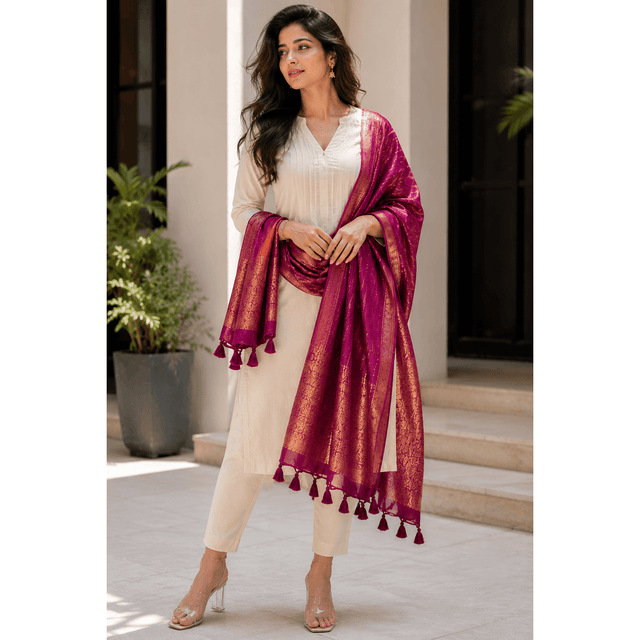
A shawl can change the balance of an ethnic outfit without requiring a new kurta or saree. The key is to decide what you want it to do: add a contrasting colour, frame the neckline, create a long vertical line, or give the shoulders a little coverage for travel and indoor functions. A neat drape should feel intentional, stay in place as you move, and let the outfit underneath remain visible.
These five simple shawl draping ideas work as starting points for kurtas, suit sets and sarees. Adapt each one to the shawl’s size, weave, border and the details of your outfit; the exact fabric and care instructions vary by product, so check the item page before styling.
1. The easy one-shoulder drape
For a straight kurta or a simple suit set, place the shawl over one shoulder and let the longer end fall down the front. Keep the other shoulder and neckline visible. This is an easy option when the shawl has a decorative border or tassels that you want people to notice without wrapping the whole outfit.
Balance the look by matching one colour in the shawl to your kurta, trousers or footwear. If the shawl is richly patterned, keep the necklace understated—or skip a necklace and let earrings do the work. Before leaving, check that the fabric is not dragging on the floor or catching on a bag strap.

2. The classic two-shoulder wrap
For a family gathering, a long journey or an air-conditioned venue, open the shawl and lay it across both shoulders, allowing the ends to fall evenly at the front. This gives a balanced outline and makes it easy to adjust the coverage while sitting or standing. It works particularly well with a plain kurta because the shawl adds colour and texture without changing the base outfit.
Check the width and length before you choose this drape. A shorter piece may sit better with the ends brought forward; a longer piece may need a gentle fold so it does not bunch around the elbows. Do not assume that every shawl provides the same warmth: weight and feel depend on the specific fabric and construction.
3. The open-front vertical drape
For a long kurta or a simple co-ord, place the centre of the shawl at the back of the neck and let both ends fall straight down the front. Keep the edges parallel rather than twisting the fabric. This creates two vertical lines that can make the outfit look more structured and gives the shawl a scarf-like role instead of a full wrap.
If you need extra stability, use a discreet scarf ring or secure the fabric where it can be held without snagging. Avoid piercing delicate embroidery or decorative woven areas with a pin. A small adjustment at the shoulder is often enough to keep the ends from slipping.

4. A diagonal drape over a saree
When wearing a saree, position the shawl so it complements rather than hides the pallu. Try laying one end over a shoulder and bringing the other end diagonally across the upper body, leaving the saree border and pleats visible. This can add a second colour or pattern, especially when the saree itself is relatively simple.
Keep the diagonal line smooth. Too much fabric gathered at the waist can compete with the saree pleats, while a shawl that covers the entire pallu can hide one of the outfit’s most distinctive details. If the saree already has a strong border or heavy embellishment, choose a calmer shawl; if the saree is plain, a patterned layer can add contrast.
5. A structured drape with a belt
For a contemporary silhouette, wear the shawl open over a long, straight kurta and use a removable belt to hold the fabric at the waist. This is best treated as a styling experiment rather than a rule: test the belt over the shawl first, check that it does not pull the fabric, and make sure the garment remains comfortable when you sit down. Skip the belt if it creases the weave, presses against embellishment or makes the drape difficult to adjust.
A tonal belt can keep the look subtle; a contrasting belt can create a stronger focal point. If the shawl has tassels, let them hang freely rather than trapping them under the belt.

How to make the colours and patterns work together
- Repeat one colour. Pick a shade from the shawl and echo it in the kurta, earrings, footwear or bag.
- Balance pattern scale. If the shawl has a bold border or dense motif, keep the kurta or saree print quieter.
- Choose one focal point. A decorative shawl, large earrings and a heavily worked neckline can compete. Let one element lead.
- Check the full-length view. Look at the outfit from the front and side so the ends, tassels and borders fall neatly.
- Move before you leave. Sit, walk and lift your arms once to check that the drape stays comfortable and does not catch on jewellery or a bag.
Shop the look with the product details in mind
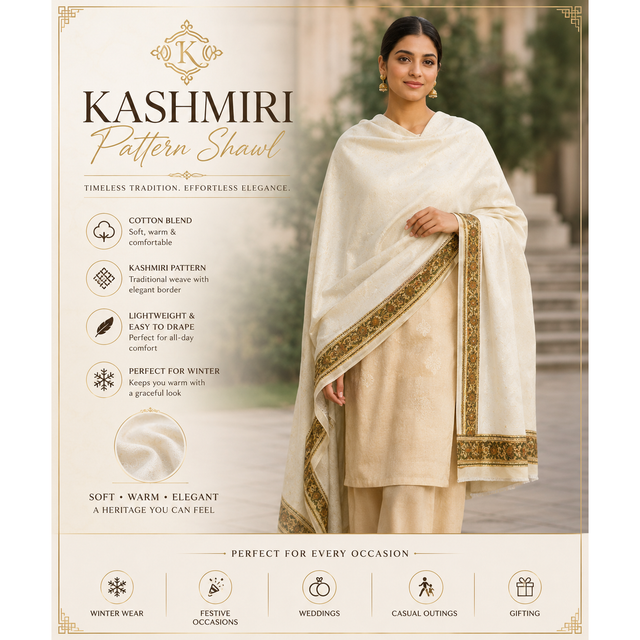
For a strong contrast, consider the Magenta & Gold Jacquard Woven Shawl with Tassels. For a lighter neutral styling direction, see the Ivory Embroidered Cotton Shawl with Gold Motif Border. The Green & Purple Woven Silk Blend Shawl offers a different colour combination, while the Off-White Kashmiri Pattern Cotton Blend Shawl is another neutral option to compare.
Product construction, exact dimensions, material details and availability can differ, so use each product page as the source of truth before choosing a drape. For selection advice, read How to Choose a Shawl Online: Size, Colour, Texture & Care. If you mainly wear kurtas to work, the Office Ethnic Wear Capsule has related outfit formulas.
A final styling check
Before you head out, make sure the shawl is not dragging, the border is visible where you want it, and any pin or ring is secure without pulling the fabric. Keep the care label or product guidance in mind when folding or storing the piece after use. A good drape should support the outfit—not make you spend the evening adjusting it.
For complementary outfit ideas, browse women’s ethnic wear and the Diwali and Dhanteras collection. Confirm current product details, availability and delivery information on each listing.
Shop products related to this guide
Shop the products in this guide
Explore the relevant Couturier Design picks below. You can add an item to your cart without leaving this article.